Quick Answer: How Much Fuel to BuyFor a typical 6-10 hour spit roast, plan
on using 10-18 lbs (4.5-8 kg) of charcoal per hour [1] [2]. Always buy at least
30-40% more fuel than you calculate. The exact amount depends on wind,
weather, and your specific setup. For beginners, charcoal offers easier
temperature control. For flavor, wood is excellent but requires more skill to
manage. The goal is a steady coal bed, not a smoky fire. For more details on fire
management, see our guide on Spit roast setup & fire control.
The 3 things that decide fuel needs the most
Your fuel plan comes down to three main factors:
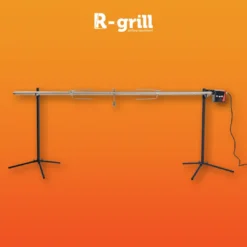
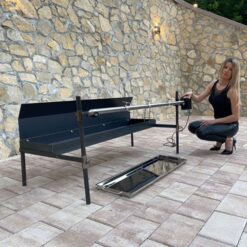
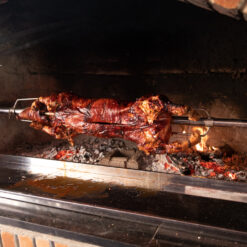
1. Fire Setup: An open spit roast, like the ones our R-Grill rotisseries are
designed for, will always use more fuel than an enclosed smoker or a pit. You
are heating the open air, so you need a consistent and strong coal bed to
maintain temperature.
2. Weather & Wind: Wind is the biggest variable. A windy day can easily double
your fuel consumption as it blows heat away from the meat [3]. Cold weather
also forces your fire to work harder, requiring more fuel to maintain the same
temperature [4].
3. Cook Time: The longer your roast, the more fuel you’ll need. A 150 lb pig
might take over 10 hours, while a 40 lb lamb might be done in 4-5 hours.
Check our time guides for estimates:
• Time by Weight: Pig
• Time by Weight: Lamb]
Why open rotisserie uses more fuel than you expect
Unlike a closed BBQ pit or smoker that traps and circulates heat, an open-air
rotisserie is constantly losing heat to the surrounding environment. Think of it like
heating a room with the windows open. To keep the meat at a consistent roasting
temperature, you must continuously replenish the heat source—your coal bed. This
requires a steady supply of fuel throughout the entire cook, which is why
experienced pitmasters always bring more fuel than they think they’ll need.
Charcoal: when it’s the better choice
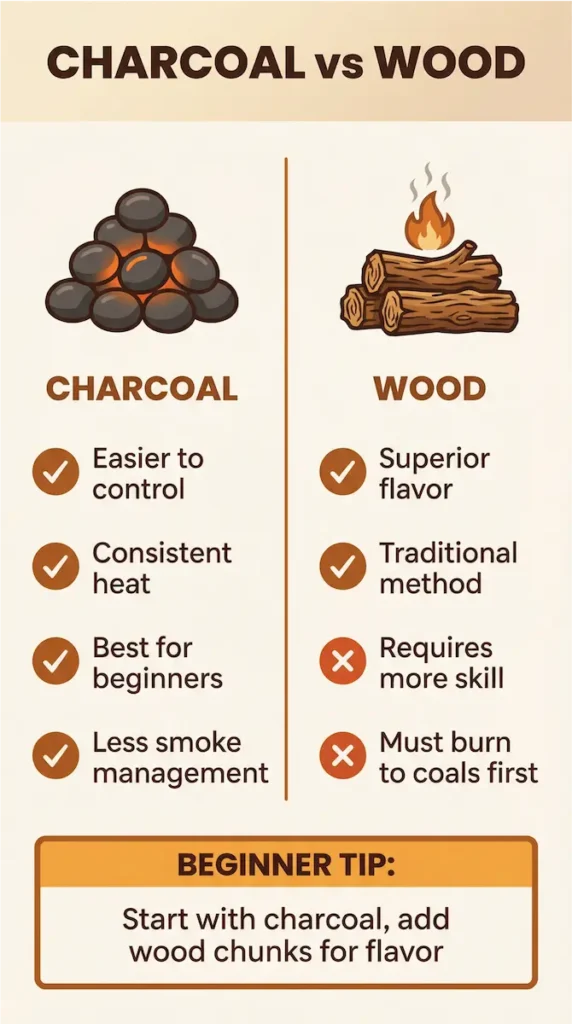
Charcoal is the recommended choice for beginners because it provides a more
consistent and predictable heat. It’s easier to manage, burns evenly, and makes
temperature control much simpler. Lump charcoal is preferable to briquettes as it
contains fewer additives and produces less ash.
Wood: when it’s the better choice
Wood offers superior flavor potential, infusing the meat with a distinct smoky taste
that charcoal alone cannot replicate. However, it requires more skill to manage.
Wood must be burned down to coals before being used for cooking to avoid “dirty
smoke,” which can ruin the meat with a bitter, acrid flavor [5].
The “R-Grill way” recommendation (clear stance)
For a reliable and successful first roast, we recommend starting with charcoal for
your primary heat source. It’s the most straightforward way to guarantee a stable
temperature for hours. Once you are comfortable managing the fire, you can
introduce wood for flavor.
If you choose to use wood, we recommend dry, seasoned beech wood as an
excellent, mellow-flavored option popular in European roasting traditions [6]. Other
dry hardwoods like oak, maple, or fruitwoods also work well. The key is that the
wood must be well-seasoned and have low moisture content.
What “dirty smoke” is and why it matters
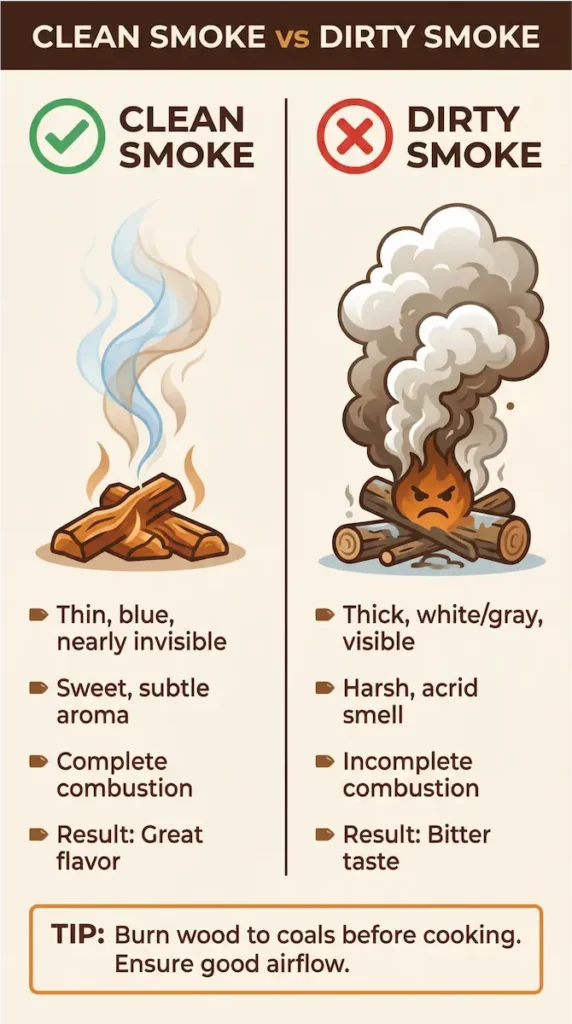
“Dirty smoke” is the thick, white, billowing smoke that comes from a fire that isn’t
getting enough oxygen or is burning fuel that is wet or green. This type of smoke is
full of particulates and a substance called creosote, which leaves a bitter, unpleasant
taste on your meat [7].
Clean smoke, often called “thin blue smoke,” is nearly invisible and has a pleasant
aroma. This is the goal for any long roast. It means your fire is burning efficiently and
will impart a desirable smoky flavor without bitterness.
Best practice: burn to the side vs directly underneath
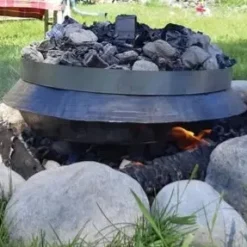
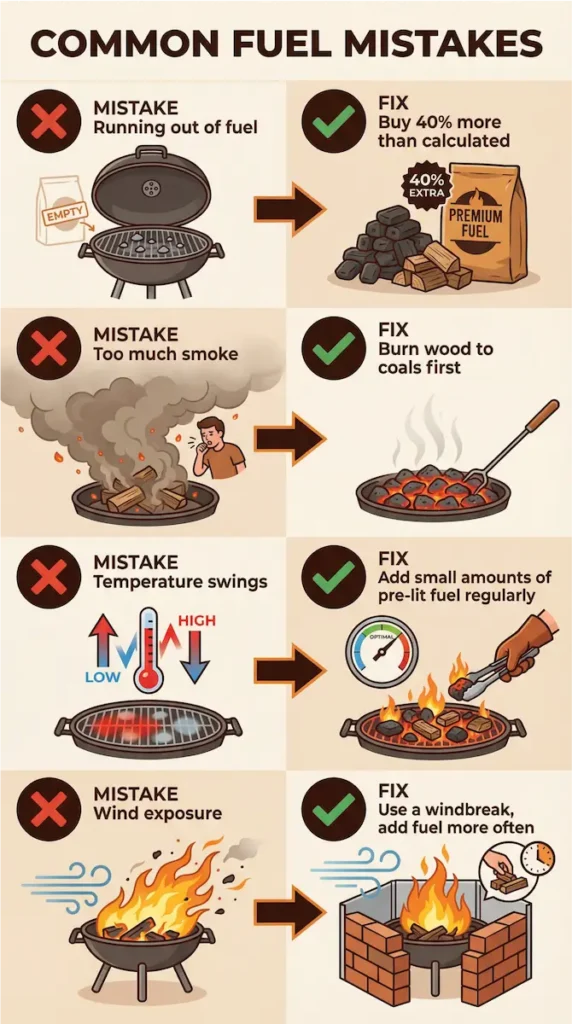
To achieve clean smoke and avoid over-smoking the meat, the best practice is to
burn your wood down to coals in a separate pile or firebox to the side of the
rotisserie. Once the wood has burned down to glowing embers, you can then move
those coals under the meat.
Placing wood directly under the animal to burn can create intense, dirty smoke that
smothers the meat. While a typical charcoal setup involves placing coals directly
underneath, it’s crucial to ensure they are fully lit and ashed over before the meat
goes on.
What to avoid (green/treated wood, flare-ups, heavy soot)
For both safety and flavor, never use the following:
• Green or unseasoned wood: It contains too much moisture and will produce
excessive dirty smoke.
• Treated, painted, or pallet wood: These can release toxic chemicals when
burned.
• Softwoods like pine or spruce: They contain resins that create a harsh,
unpleasant smoke.
• Excessive flare-ups: Fat dripping onto hot coals can cause flare-ups that
coat the meat in soot. Keep a water spray bottle handy to manage them.
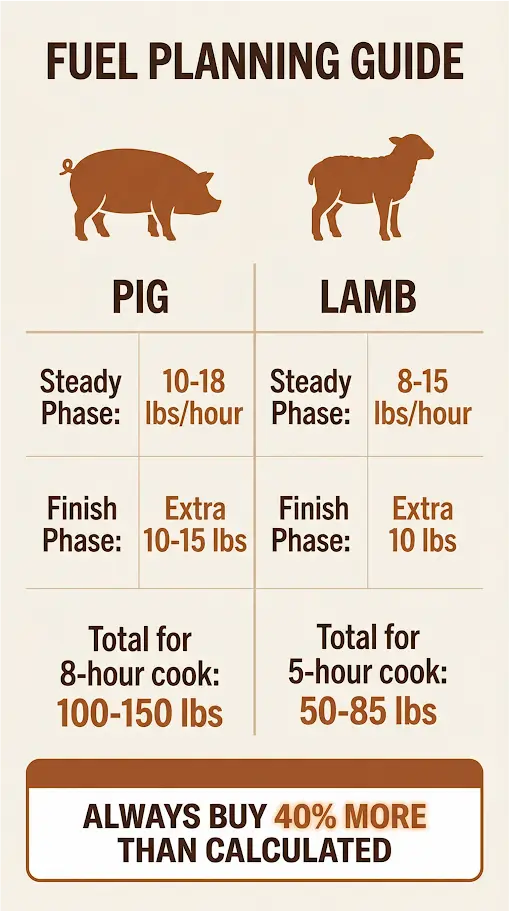
Fuel planning table (Pig vs Lamb + steady vs finish)
This table provides a general guideline for fuel planning. Remember, these are
estimates. Always have a generous reserve.
“Buy Extra” logic (simple rules)
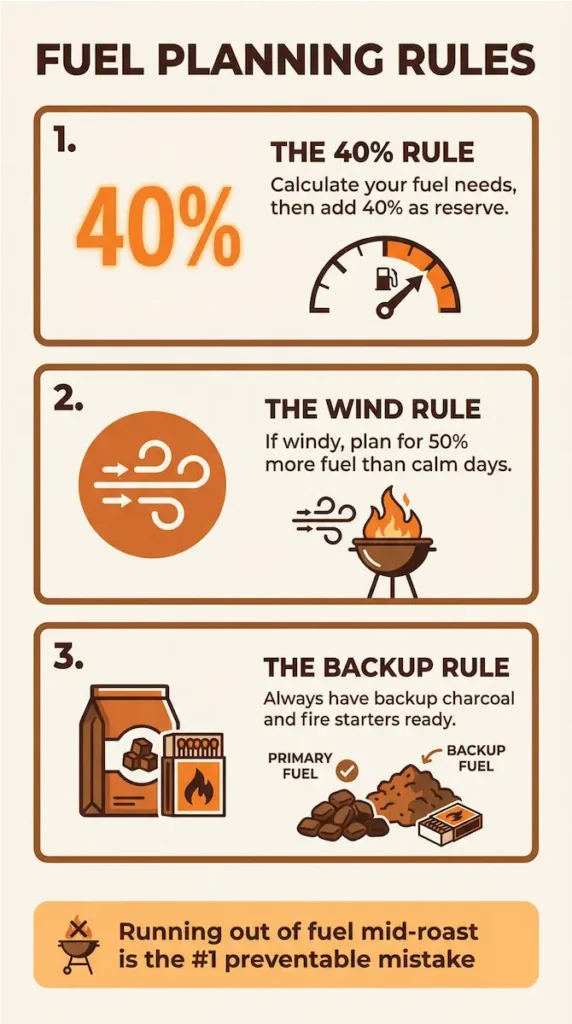
The Golden Rule of Fuel: Buy More Than You Think You NeedRunning out of
fuel mid-roast is the number one preventable mistake. Here’s how to avoid it:-
The 40% Rule: Calculate your estimated fuel needs, then add 40% as a
reserve.- The Wind Rule: If it’s windy, assume you’ll use at least 50% more fuel
than on a calm day [3].- The Backup Rule: Have a backup bag of charcoal and a
backup fire starter (chimney, lighter cubes) ready to go.
Steady phase: consistent heat, stable coal bed
The first 80% of your cook is the steady phase. The goal here is consistency. You
want a stable bed of coals that provides even, indirect heat to slowly bring the
internal temperature of the meat up. During this phase, you should be adding pre-lit
coals every 45-60 minutes to maintain your target temperature without creating large
heat swings.
Finish phase: crisping skin and dialing heat
The final portion of the cook is the finish phase, where you focus on crisping the
skin. This often requires an increase in heat. This is where your reserve charcoal
comes in. You can add a fresh batch of hot coals to raise the temperature for the last
30-60 minutes. Be extremely careful during this phase, as the rendered fat can easily
cause flare-ups. This is not the time to walk away from the grill.
Charcoal setup checklist
• ☐At least two large bags of high-quality lump charcoal (40+ lbs / 18+ kg total)
• ☐A charcoal chimney starter
• ☐Natural fire starters (e.g., wax cubes, paper towels with oil)
• ☐A metal bucket with a lid for ash disposal
Wood setup checklist
• ☐A pile of dry, seasoned hardwood (beech, oak, maple)
• ☐An axe or hatchet for splitting larger pieces
• ☐A separate area or firebox to burn wood down to coals
Tools that save your roast
• High-heat gloves: Essential for handling hot grates, charcoal, and the spit.
• Long-handled shovel and tongs: For safely moving hot coals.
• Instant-read thermometer: The only way to know for sure when your meat is
done.
• Windbreak: A simple, non-flammable barrier (like plywood sheets) can
dramatically reduce fuel consumption on a windy day.
Is charcoal or wood better for beginners?
Charcoal is better for beginners. It provides more consistent heat and is easier to
control.
Can I mix charcoal and wood?
Yes. A great strategy is to use charcoal as your primary heat base and add a few
chunks of hardwood for flavor once the coal bed is established.
What’s the safest way to add fuel during the roast?
Use a charcoal chimney to light a new batch of charcoal away from the rotisserie.
Once the new coals are ashed over, use a shovel and high-heat gloves to add them
to the main fire.
How do I keep steady heat when it’s windy/cold?
Use a windbreak, add fuel more frequently, and keep the lid of your grill (if you have
one) closed as much as possible. Expect to use significantly more fuel.
Does lamb need less fuel than pig?
Yes, generally. A whole lamb is typically smaller and cooks faster than a whole pig,
so it requires less total fuel. However, the hourly consumption rate can be similar.
Next Step
Spit roast setup & fire control
Time by Weight charts
Time by Weight: Pig
Safety checklist
[Link: Safety checklist]
[1]:PigOut Roasters, How to Roast a Pig on the Charcoal Rotisserie
[2]: Dan’s Grill Rental, Roast a Pig
[3]: Weber, Grilling in the Elements
[4]: Napoleon, How to BBQ with Charcoal in Winter
[5]: Butcher BBQ, Dirty Smoke vs. Clean Smoke: The Key to Mouthwatering Barbecue
[6]: Smokin’ Licious, TO THE BEECH WOOD FOR SMOKING WE GO!
[7]: Bradley Smoker, Why Your Smoked Meat Tastes Bitter and How to Smoke Better
[8]: R-Grill