A whole pig can feed anywhere from 10 to over 25 people, depending on its size and your crowd. As a starting point:
Your final number will depend on whether you have light eaters or a hungry crowd, and how many side dishes you offer. For more details, see our complete roasting guide.
Use this chart as your primary guide. It accounts for different appetites and provides a realistic starting point for your event.
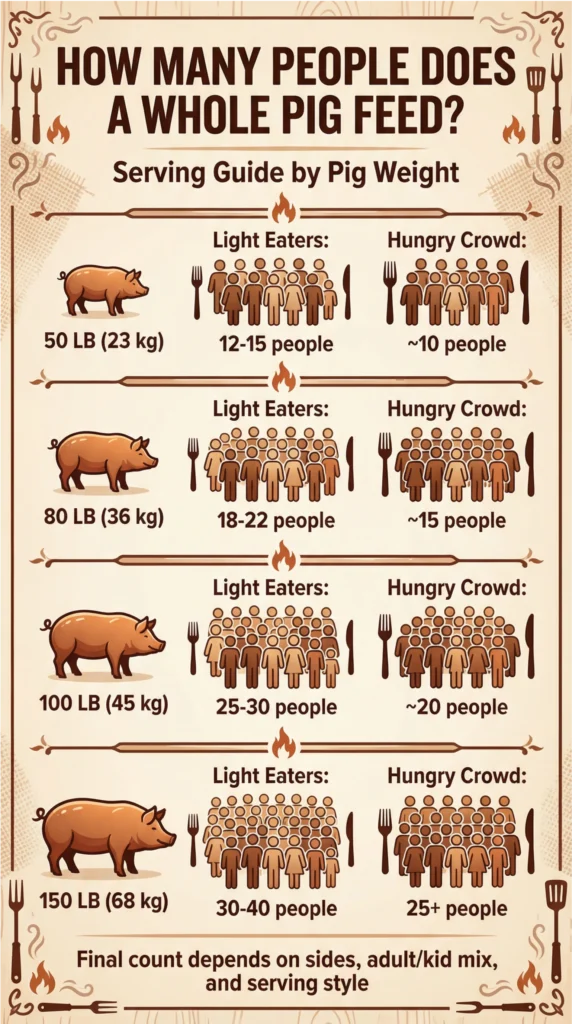
| Pig Weight (Dressed) | Light Eaters / Lots of Sides | Hungry Crowd / Fewer Sides | Notes |
|---|---|---|---|
| 50 lb (23 kg) | ~12-15 people | ~10 people | Great for smaller gatherings. |
| 80 lb (36 kg) | ~18-22 people | ~15 people | A popular choice for medium-sized parties. |
| 100 lb (45 kg) | ~25-30 people | ~20 people | The classic hog roast size. |
| 150 lb (68 kg) | ~30-40 people | ~25+ people | Ideal for large events or when you want leftovers. |
Note: These are estimates. The final number depends on the adult/kid mix, the variety of side dishes, and how the meat is served.
It’s tempting to use a simple “pounds per person” rule, but it’s not accurate for whole animals. The ratio of meat to bone and skin changes as a pig gets larger. A smaller pig has a lower meat yield compared to a larger one. Furthermore, cooking loss (moisture evaporation) can reduce the final weight by 10-20%. This is why our table provides ranges, not a single coefficient.
The Event: A family reunion or corporate picnic where the pig is the centerpiece, but there are 5-7 other substantial side dishes (salads, potatoes, mac & cheese, etc.). Guests are a mix of adults and children, and the event is in the afternoon.
Planning Approach: You can safely use the higher end of the serving estimates. With plenty of other food options, guests will take smaller portions of pork. For a 100 lb pig, you could comfortably serve 25-30 people.
The Event: A late-night party, a wedding reception with a young crowd, or any event where the pig is the main attraction with only 2-3 simple sides.
Planning Approach: Use the lower end of the serving estimates. With less competition from other dishes, the pork will disappear quickly. For a 100 lb pig, plan for about 20 people to ensure everyone gets their fill.
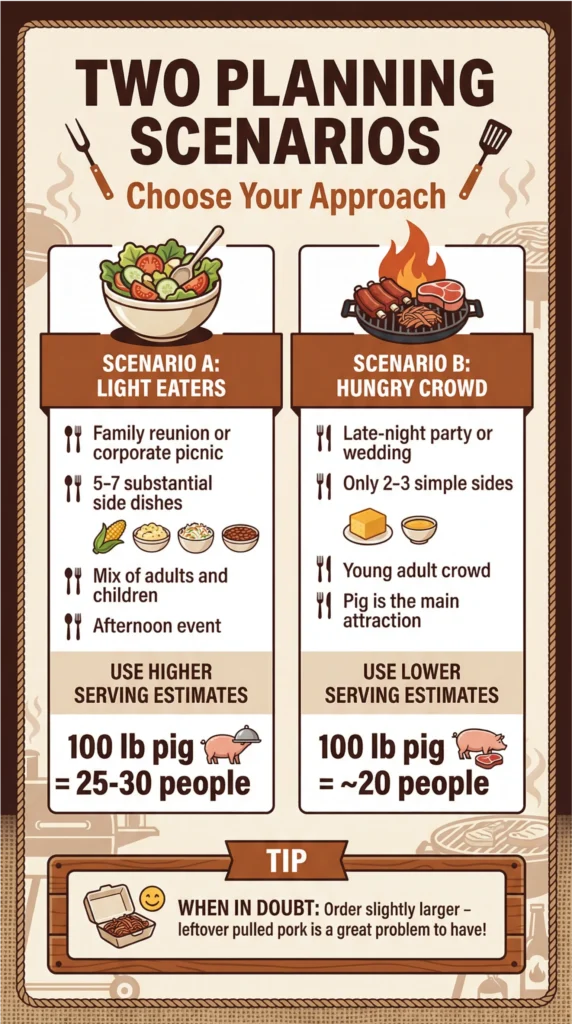
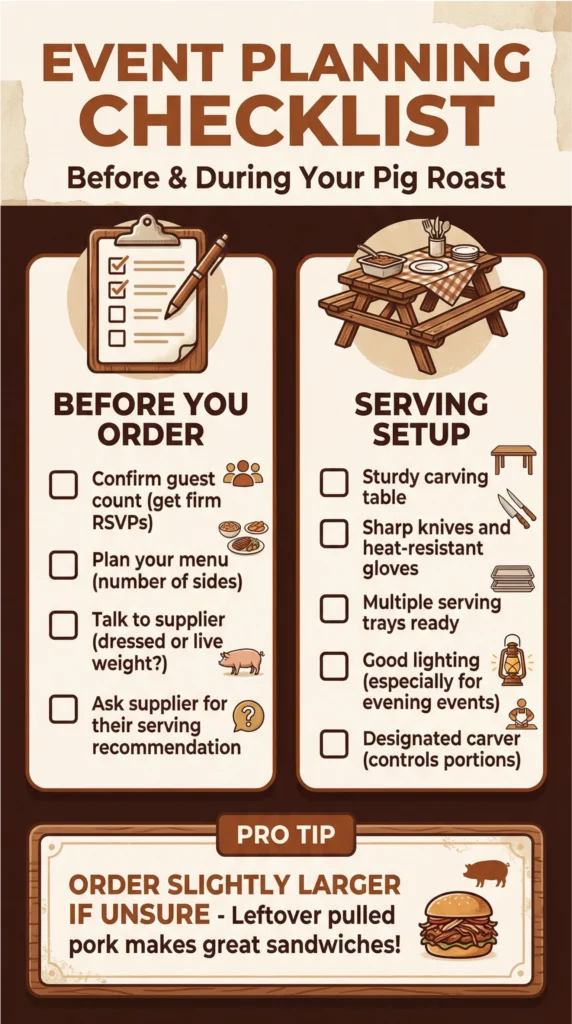
If you’re unsure, it’s always better to have too much than too little. Leftover pulled pork is fantastic for sandwiches, tacos, or freezing for later. If you want planned leftovers, consider ordering the next size up.
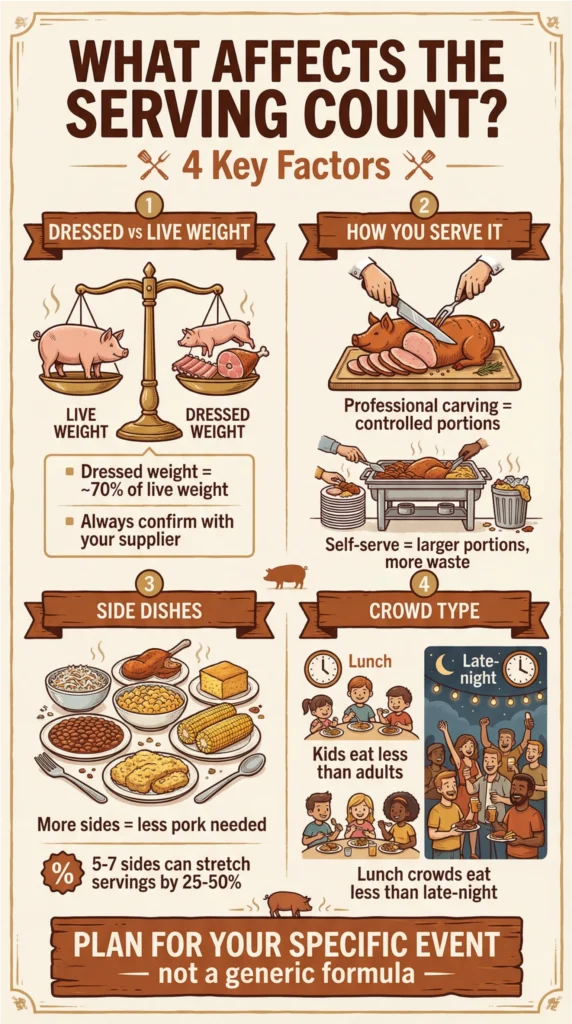
“Live weight” is the weight of the pig on the hoof. “Dressed weight” is the weight after it has been prepared by the butcher (typically 70-72% of the live weight). Always confirm with your supplier which weight you are paying for and receiving.
If you have a designated person carving and serving, you can control portion sizes and reduce waste. A self-serve station often leads to larger portions and more dropped meat.
The more side dishes you have, the less pork you’ll need. If you have a full spread, you can stretch a smaller pig to feed more people.
Kids eat less than adults. A lunchtime crowd will typically eat less than a dinner or late-night crowd.
It feeds about 20 people if it’s the main dish with a hungry crowd, or up to 25-30 people if there are many other food options.
Plan using the “Hungry Crowd” scenario and consider ordering the next size up to be safe.
With 5-7 substantial sides, you can often stretch your pig to feed more people—sometimes 25-50% more than the base estimate.
Often, yes. The price per pound can be lower on larger animals, and the meat yield is slightly better.
Follow the “Hungry Crowd” estimates and, when in doubt, order a slightly larger pig. Leftover pulled pork is a great problem to have.
Ready to plan your event? Here are the guides you’ll need: