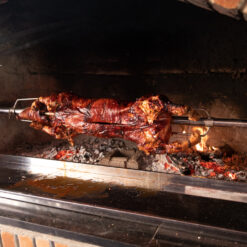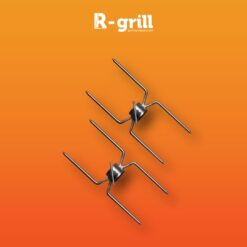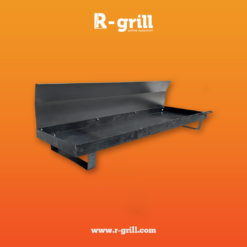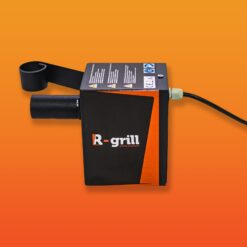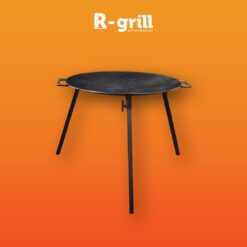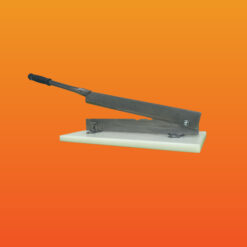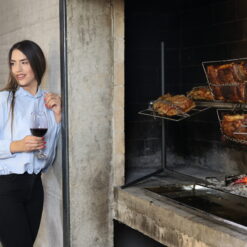
For roasting a whole pig or lamb, a motor is the smart choice for consistency, safety, and better results. Manual rotation can work for small, short cooks if you have dedicated helpers, but the biggest risks are uneven cooking and host fatigue. A motor ensures the steady, hours-long rotation needed for a perfect roast. For more details, see our complete roasting guide.
A rotisserie motor isn’t a luxury; it’s a core component for achieving a perfect whole-animal roast. Here’s what it does.
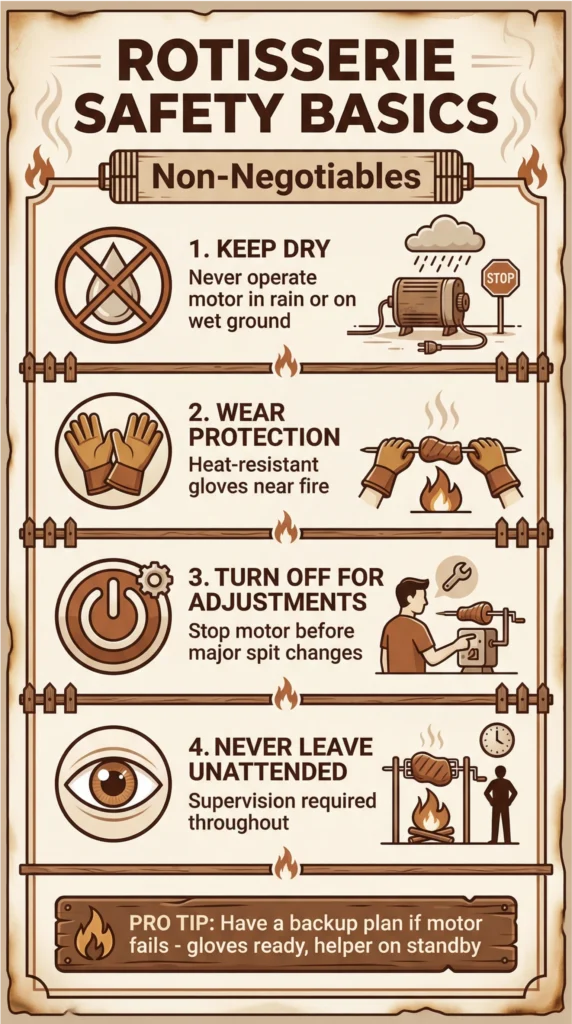
A motor turns the spit at a slow, steady pace—typically 2-4 RPM—that you simply cannot replicate by hand over a long period. This constant motion ensures every part of the animal gets equal exposure to the radiant heat, resulting in evenly cooked meat and that coveted crispy, golden-brown skin.
With a motor handling the rotation, you are free to manage the other critical parts of the roast: maintaining the fire, checking internal temperatures, and watching for flare-ups. It turns a frantic, one-person job into a manageable, supervisory role.
Manually turning a heavy, hot spit for hours is tiring and increases the risk of burns or accidents. A motor automates the most physically demanding part of the job, allowing you to work more safely and deliberately around the hot fire.
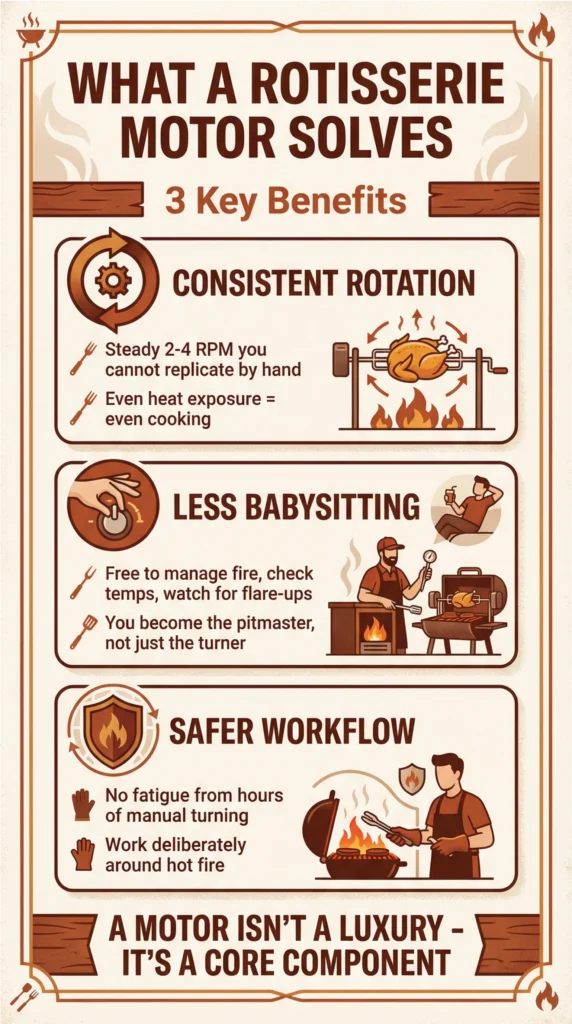
| Option | Best For | Trade-offs | Risk Points |
|---|---|---|---|
| Motorized | Whole pig/lamb, long roasts (3+ hours), solo hosting, windy/cold weather. | Requires a power source, another piece of equipment to manage. | Electrical safety (keep dry), motor failure (have a backup plan). |
| Manual | Small cuts (chickens, roasts), short cooks (<2 hours), multiple dedicated helpers. | Requires constant attention, physically demanding, hard to maintain consistent speed. | Host fatigue, uneven cooking, inconsistent results, distraction from other tasks. |
If you’re roasting a few chickens for an hour or have a team of strong, attentive friends who can take 15-minute shifts without getting distracted, manual rotation can work. The key is a small load, a short cooking time, and a reliable team.
For any whole pig or lamb roast, which can take anywhere from 4 to 12 hours, a motor is non-negotiable for a great outcome. It’s also the right choice if you’re hosting with limited help or cooking in challenging conditions like wind or cold, where consistent heat exposure is even more critical.
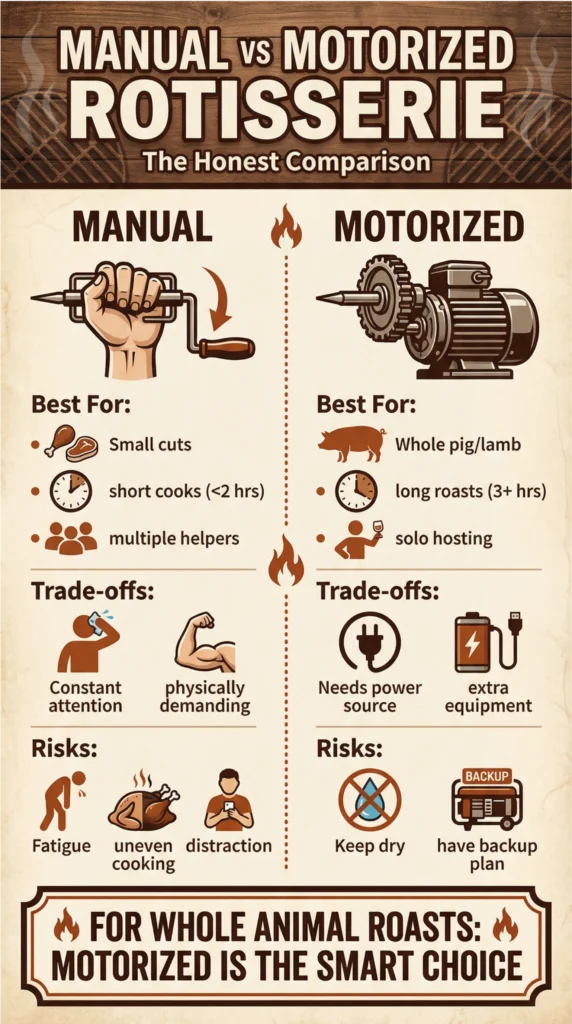
When you turn a spit by hand, you inevitably speed up, slow down, or pause. These micro-changes in rotation speed create hot spots and cool spots, leading to sections of the animal that are overcooked and dry while others are undercooked.
What starts as a fun novelty becomes a serious chore by the third or fourth hour. Helpers get distracted, tired, or bored, and the rotation becomes erratic. This is often when a great roast turns into a mediocre one.
If you’re tied to the spit handle, you can’t effectively manage the fire, check temperatures in different parts of the animal, or react to flare-ups. A motor frees you to be the pitmaster, not just the turner.
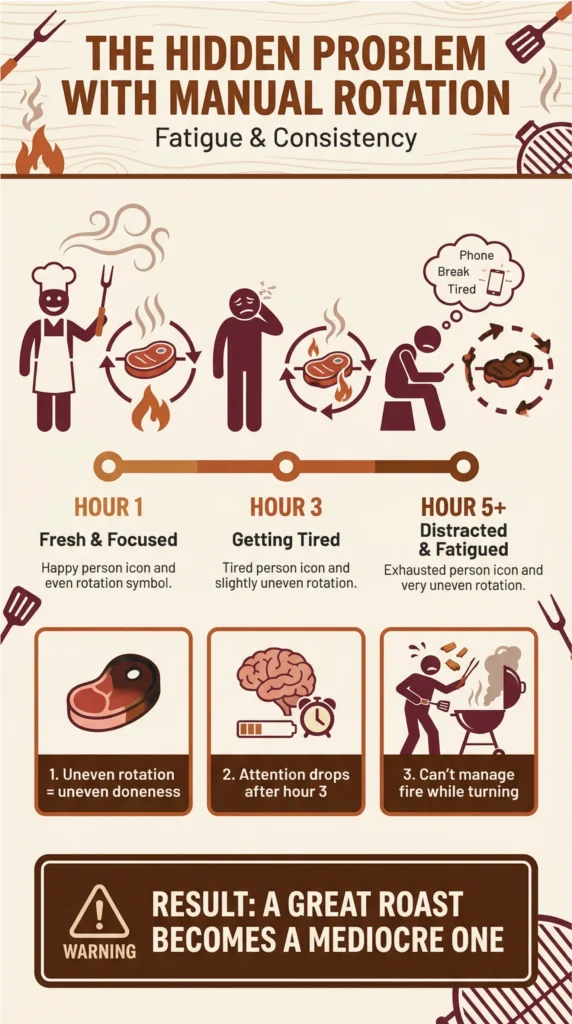
Treat your rotisserie setup with the same respect you’d give any power tool. Never operate a motor in the rain or on wet ground. Do not touch the motor or power cord with wet hands, and always wear heat-resistant gloves when working near the fire. Motor installation should be handled by someone with electrical experience.
If you need to make a major adjustment to the spit or the animal, it’s a good practice to briefly turn off the motor. This prevents accidents while you work. Always prioritize a safe, controlled environment.
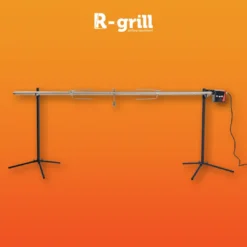
You don’t need to get lost in torque specs. A good motor is one that can turn your intended load smoothly and without struggling. It should be securely mounted and operate reliably for hours. The motors included with R-Grill kits, for example, are specifically matched to the rotisserie’s capacity.
A powerful motor can’t compensate for an unbalanced load. An improperly balanced pig or lamb will cause jerky rotations and put immense strain on the motor, potentially leading to failure. Learn how to balance a whole pig or lamb on a spit.
Even with the best equipment, things can happen. Have a pair of heavy-duty gloves and a plan. If a motor fails, you may need to revert to manual turning or pause the roast while you troubleshoot. Having a helper on standby is always a good idea.
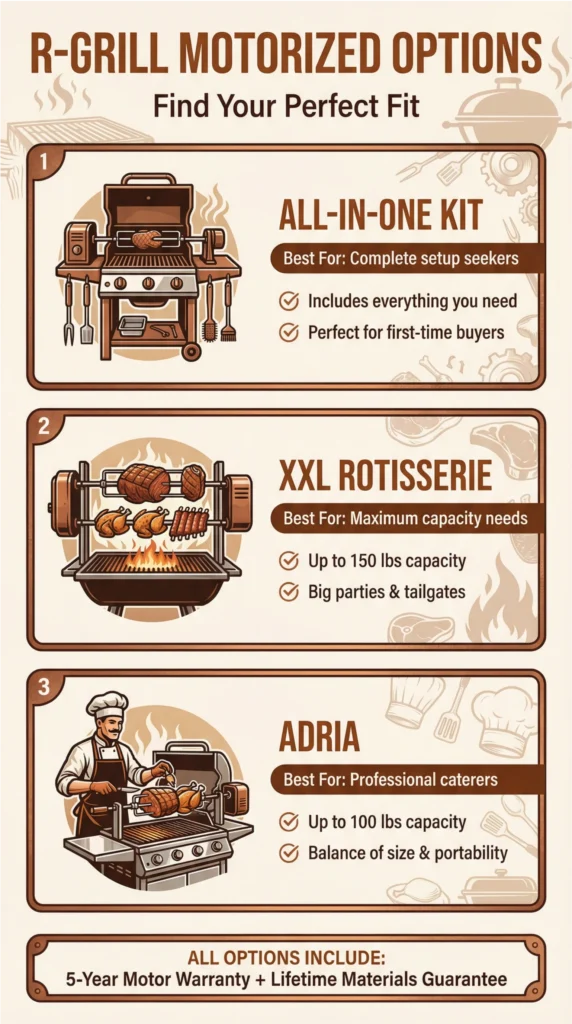
R-Grill offers several motorized setups designed for different needs.
This all-in-one kit is perfect for the serious griller who wants a complete, powerful, and durable setup right out of the box. It’s ideal for family reunions, special events, and anyone who wants a professional-grade experience without the guesswork. Best Roasting Kit
For those who need maximum capacity, the XXL Rotisserie is the answer. Built for whole hogs and large lambs (up to 150 lbs), this is the choice for big parties, tailgates, and anyone who believes bigger is better. XXL Rotisserie
Trusted by professional caterers, the Adria is a robust, mid-size rotisserie perfect for whole pigs and lambs up to 100 lbs. It offers a fantastic balance of capacity, durability, and portability for backyard events and professional gigs alike. Adria Rotisserie
It is not recommended. The long cooking time (6-12 hours) makes consistent manual rotation nearly impossible, leading to uneven cooking and a high risk of failure.
It can be, but it introduces risks. Fatigue increases the chance of burns or mishandling the spit. A motor provides a safer, more controlled workflow.
Don’t panic. Use heavy-duty gloves to manually turn the spit to prevent one side from burning while you or a helper troubleshoot the motor or power source.
Yes. While smaller than a pig, a whole lamb still requires 3-5 hours of consistent rotation for a perfect result. A motor is highly recommended.
Absolutely. The motor ensures even cooking, but you are still the pitmaster. You must regularly check internal temperatures to know when the meat is done.
Ready to plan your motorized roast? Here are the essential guides: