Most rotisserie problems come from three things: poor heat control, incorrect distance from the fire, and an unbalanced load. The fix is usually to make small, deliberate adjustments and re-check. A good thermometer always beats guessing. For a full overview, see our complete roasting guide or our guide to fire distance and heat control.
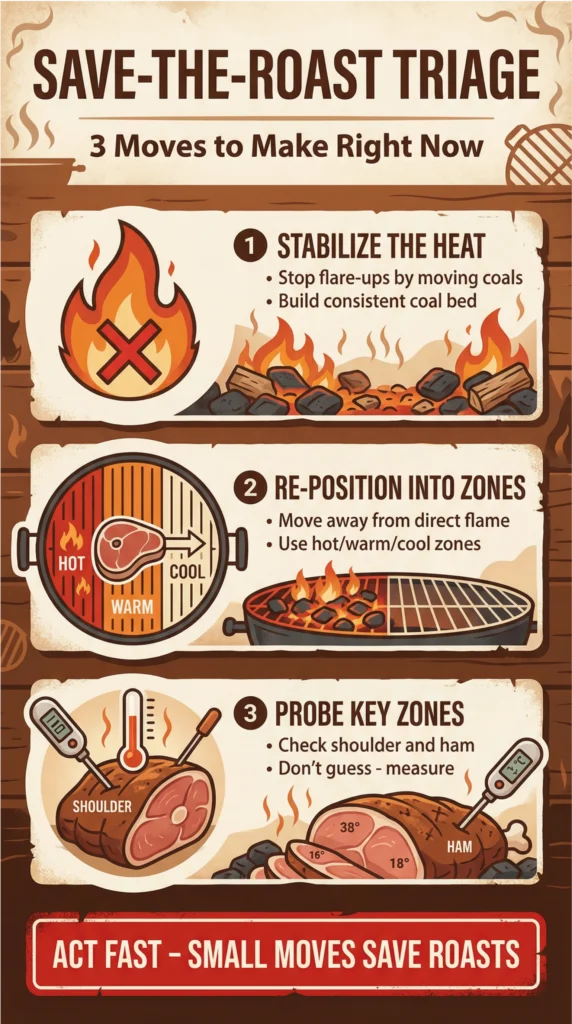
| Problem | Most Likely Cause | Fix |
|---|---|---|
| Uneven Cooking | Imbalance or poor fire management. | Re-balance the spit. Adjust your coal bed to create even, radiant heat, not direct flames. Balance guide |
| Dry Meat | Cooked too hot, too fast, or rested improperly. | Lower the heat. Let the meat rest 20-30 minutes after cooking to allow juices to redistribute. Doneness guide |
| Poor Heat Control | Inconsistent fuel supply or bad fire setup. | Maintain a steady coal bed. Add new fuel in small batches to avoid temperature swings. Fuel planning |
| Too Hot Early | Fire is too big or too close at the start. | Move the spit higher or further from the fire. Let the fire burn down to glowing coals before starting. Heat control |
| Flare-Ups | Dripping fat hitting hot coals directly. | Create a drip pan zone with no coals underneath. Move coals to the sides to avoid direct drippings. Heat control |
| Underestimating Wind/Cold | Weather is stealing your heat. | Create a windbreak. Increase fuel consumption by 25-50% to compensate for heat loss. Time by weight |
| Bad Probing | Hitting bone or checking the wrong spot. | Probe the thickest part of the meat, avoiding bone. Check multiple spots (shoulder, ham, loin). Temperature map |
| Wobble / Imbalance | Off-center load. | Power off and re-balance the animal on the spit. This is a critical safety and quality step. Balance guide |
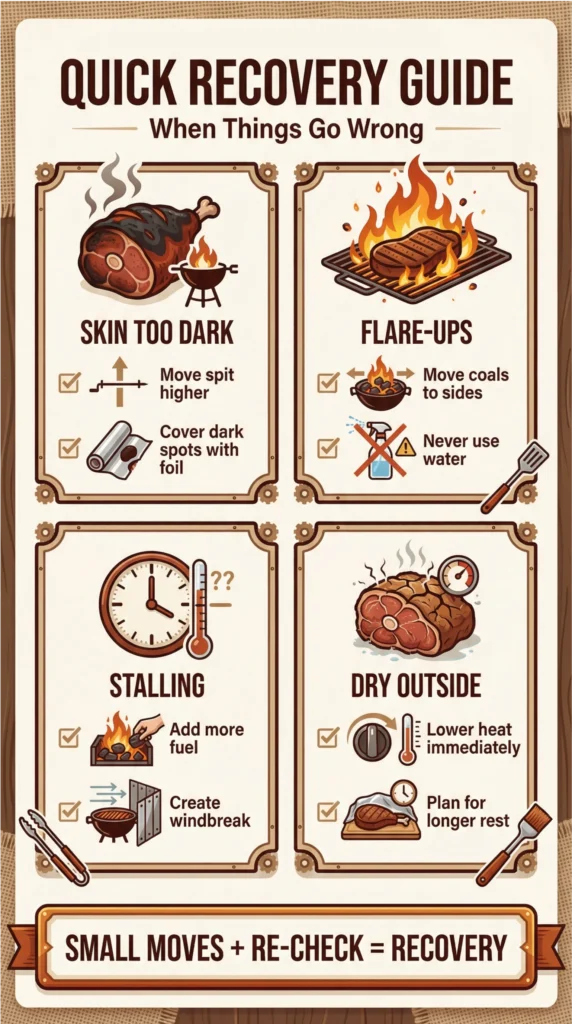
| Running Low on Fuel | Poor planning. | Add more fuel immediately, but gradually to avoid a massive temperature drop or surge. Fuel planning |
| No Zones | Fire is one uniform block of heat. | Rake coals into hot, warm, and cool zones. This gives you control to speed up or slow down cooking. Heat control |
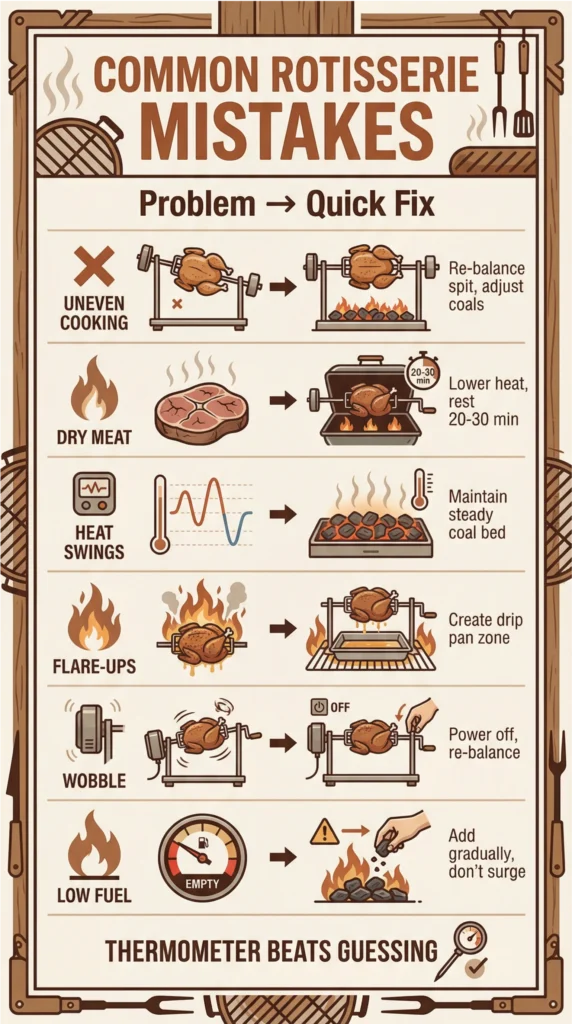
This is a classic sign of either an unbalanced load or a poorly managed fire. The side closer to the hottest part of the fire will cook faster, while the other side lags behind.
An off-center animal on the spit, or a fire that is concentrated in one area instead of being spread evenly.
First, check your balance using our balance guide. If the balance is good, adjust your fire. Move coals away from the side that’s cooking too fast and build them up on the lagging side. See our guide to fire distance and heat control.
Dryness usually means the meat was cooked at too high a temperature, causing the muscle fibers to contract and squeeze out moisture.
Running the fire too hot, especially in the beginning. Another cause is not letting the meat rest after it comes off the heat.
Cook low and slow. Aim for a gentle, radiant heat. After the roast hits its target temperature, let it rest off the heat for at least 20-30 minutes before carving. This allows the juices to reabsorb into the meat.
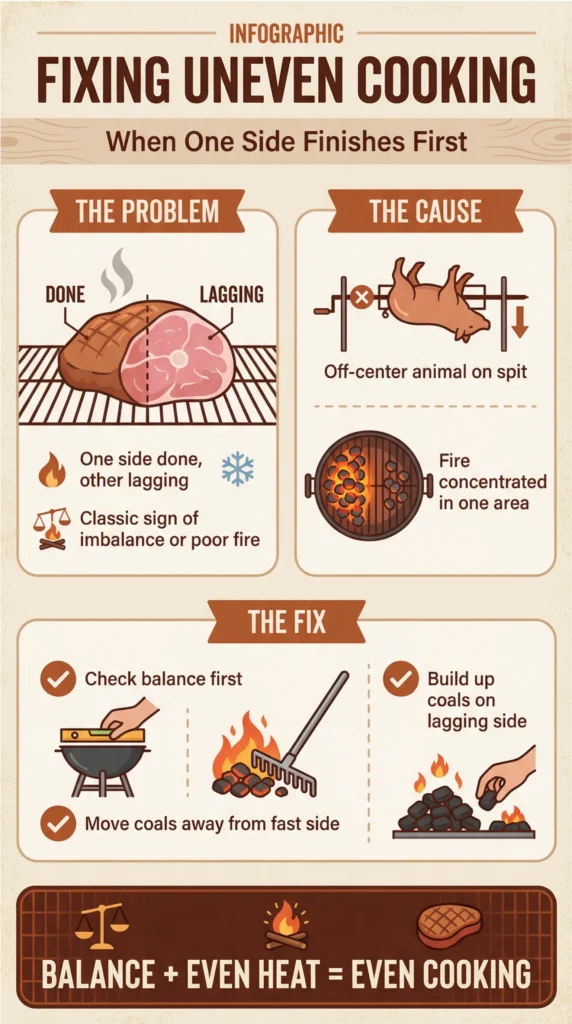
Your temperature is spiking and dropping, leading to a burnt-then-raw-then-burnt pattern on the skin.
Inconsistent fuel management. You’re either letting the fire die down too much before adding more fuel, or adding too much fuel at once.
Maintain a consistent bed of glowing coals. Add a few pieces of wood or a small amount of charcoal every 30-45 minutes to keep the heat steady. Refer to our fuel planning guide for more.
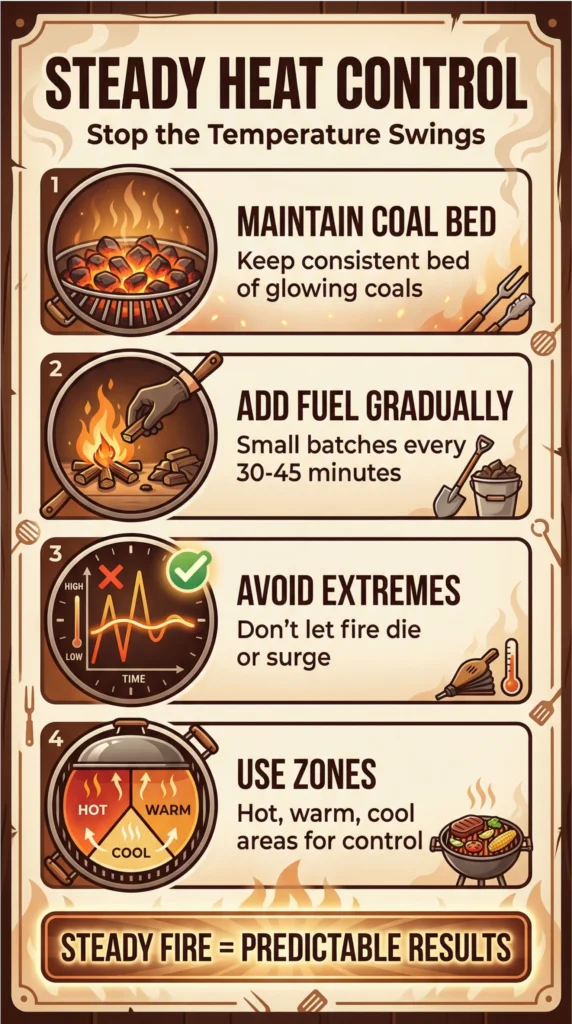
This happens when you rely on a single temperature reading or visual cues alone.
Probing the wrong spot (like the thin loin) and assuming the whole animal is done, while the thick shoulder is still undercooked.
Use a multi-point check. The shoulder is the last to finish, so it’s your primary guide. Confirm with readings in the ham and loin. Our temperature map and guide on how to tell when a whole pig is done are essential here.
Your cook time is dragging on for hours longer than expected, and the internal temperature seems stuck.
Wind and cold are the biggest thieves of heat. They can easily double your fuel consumption and extend your cook time.
Create a windbreak using non-flammable materials. Increase your fuel budget and expect a longer cook. Don’t be afraid to add more coals to fight the cold. See our time by weight guide for baseline estimates.
Poor heat control—either too hot at the start or letting the fire die. A steady, manageable fire is key.
Move the spit higher or further from the fire immediately. You can also cover the dark spots with foil to protect them while the inside finishes cooking.
Move the coals. Don’t use water, which creates ashy, dirty steam. Rake the coals to the sides so the fat drips onto a drip pan or an empty spot.
The loin is a thinner cut of meat with less fat and connective tissue. The shoulder is thick and dense, so it takes the longest to cook.
No. Find the right height during the initial setup and only make small adjustments if absolutely necessary. Constant changes lead to inconsistent cooking.
Ready to master your rotisserie? Here are the essential guides: