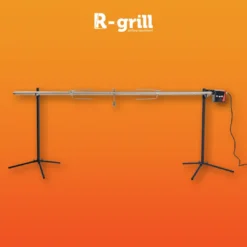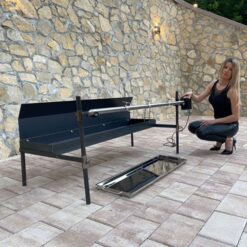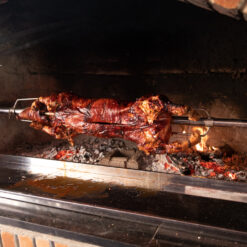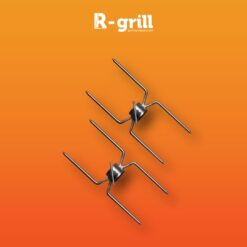
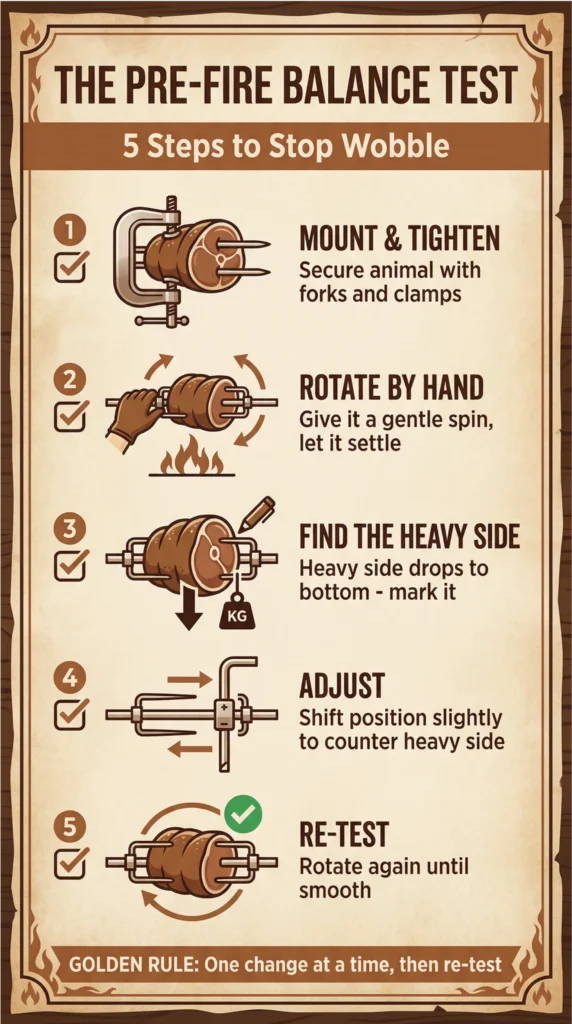
Wobble is almost always a balance or mounting issue, not bad luck. The key is to balance the animal on the spit before you light the fire. If wobble appears, turn off the motor and make small adjustments, then re-test. For more on setup, see our complete roasting guide or our safety checklist.
A wobbly rotisserie isn’t just annoying; it’s a hazard. It leads to uneven cooking (burnt skin, raw meat), puts immense strain on the motor, and creates a serious tipping risk. In a worst-case scenario, the entire setup could fall, bringing a hot animal and burning coals with it.
If you see wobble, stop. Before making any adjustments, power off the motor, put on heat-resistant gloves, and ensure the rotisserie frame is stable and not at risk of tipping.
The golden rule is one change at a time. Don’t try to fix five things at once. Make a single adjustment, then re-test the balance. This is the only way to know what’s working.
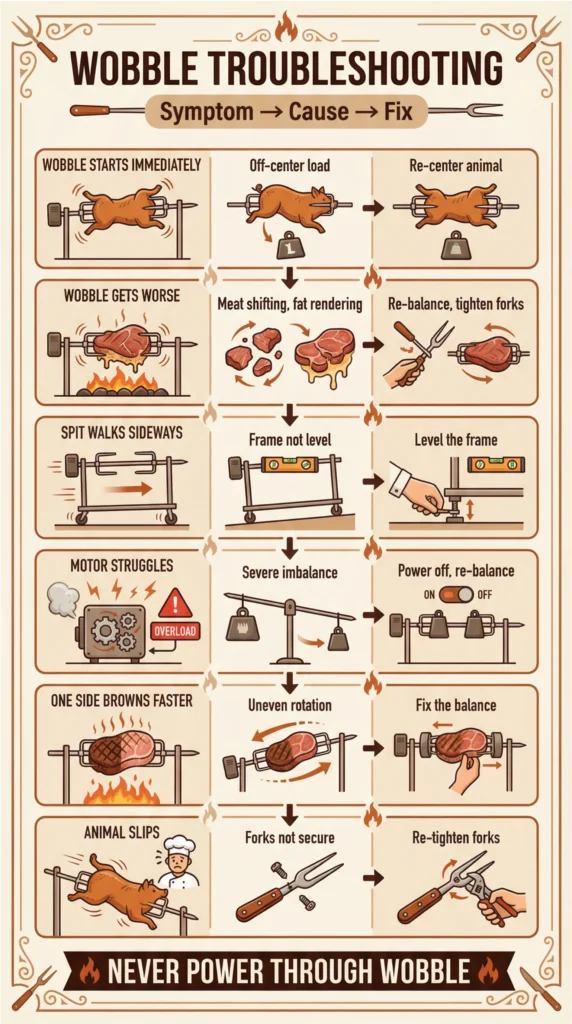
| Symptom | Likely Cause | Fast Fix | Check Next |
|---|---|---|---|
| Wobble starts immediately | Off-center load. | Re-center the animal. | Fork/clamp tightness. |
| Wobble gets worse as it cooks | Meat is shifting; fat rendering. | Re-balance; check fork tightness. | Spit alignment. |
| Spit “walks” sideways | Frame not level or spit misaligned. | Level the frame. | Support alignment. |
| Motor struggles / stalls | Severe imbalance or friction. | Power off; re-balance immediately. | Motor strength guide |
| One side browns faster | Uneven rotation due to wobble. | Fix the balance. | Fire management. |
| Clicks / knocking sounds | Spit hitting something; loose component. | Check for obstructions. | All bolts and clamps. |
| Animal slips on the spit | Forks not secure enough. | Power off; re-tighten forks. | Skin/fat lubrication. |
| Frame feels unstable / flexing | Uneven ground or loose bolts. | Stabilize the base. | All frame connections. |
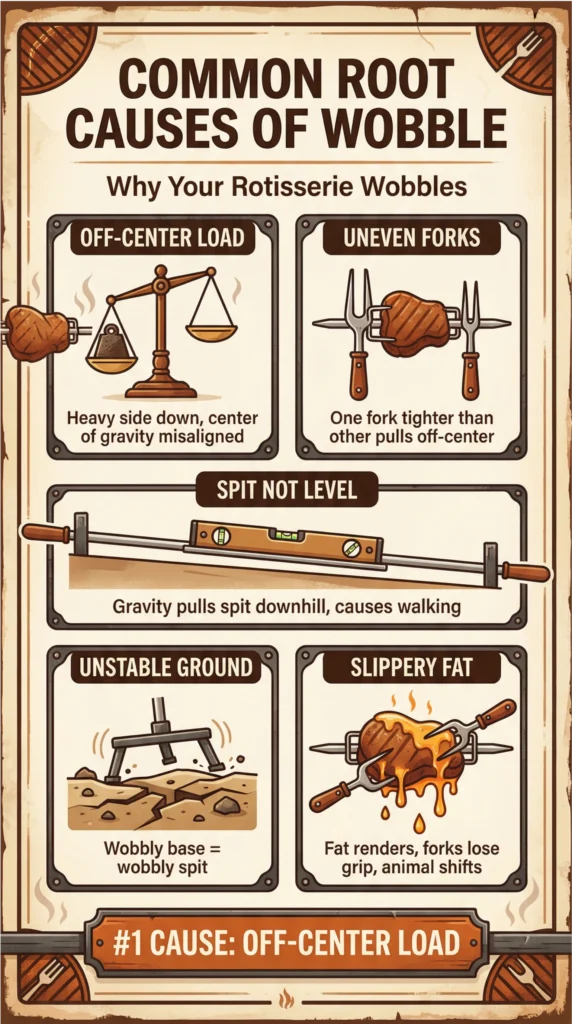
This is the #1 cause. The animal’s center of gravity is not aligned with the spit’s center of rotation.
If one fork is tighter than the other, it can pull the animal slightly off-center, creating an imbalance.
If the rotisserie frame isn’t level, gravity will pull the spit downhill, causing it to “walk” and bind against the supports.
A wobbly base translates into a wobbly spit. Ensure your setup is on solid, level ground.
As the animal cooks, fat renders and the skin can become slippery, allowing the forks to lose their grip and the animal to shift.
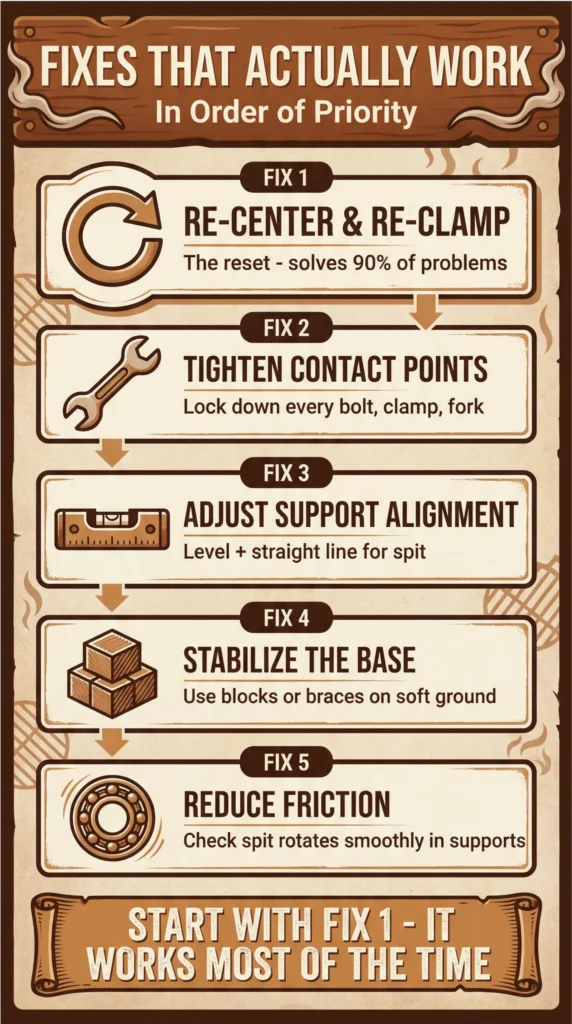
This solves 90% of problems. Loosen the forks, shift the animal slightly, and re-tighten everything.
Ensure every bolt, clamp, and fork is securely locked down. Vibration can loosen components over time.
Make sure the two spit supports are perfectly level with each other and form a straight line for the spit to travel.
If the ground is soft or uneven, use wooden blocks or braces to create a stable foundation for the rotisserie frame.
Check that the spit is rotating smoothly in its supports. Any grinding or binding is a sign of friction that needs to be addressed.
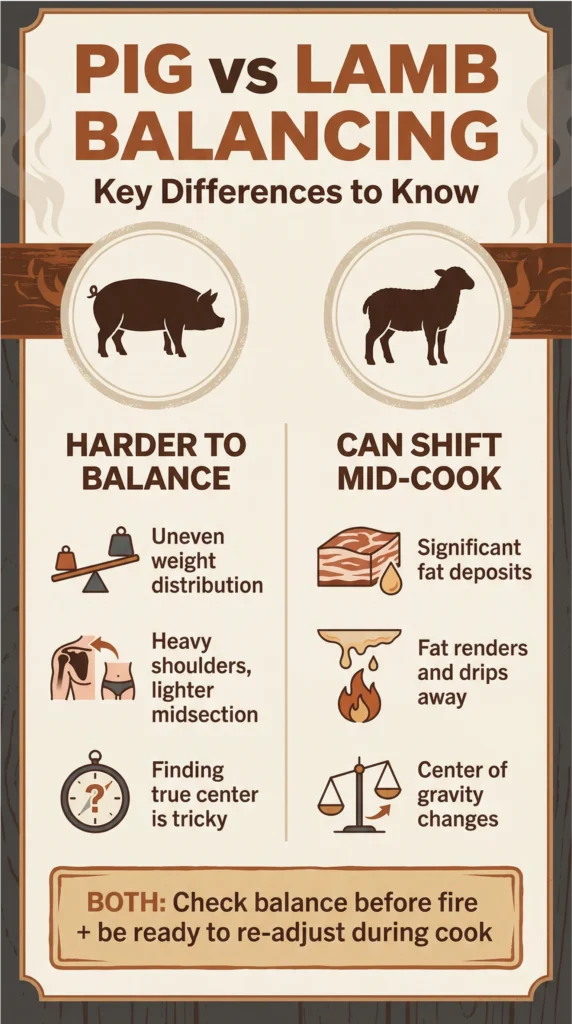
A pig’s body has an uneven weight distribution (heavy shoulders, lighter midsection). This makes finding the true center of gravity more challenging.
Lamb has significant fat deposits. As this fat renders and drips away, the animal’s center of gravity can change, sometimes requiring a mid-cook adjustment.
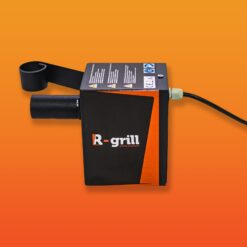
A struggling motor will often get hot, make clicking or grinding noises, or stall. For a full list of warning signs, see our motor strength guide.
If the motor is clearly failing, don’t force it. Switch to manual rotation to save the meal while you troubleshoot. Learn more about motorized vs manual rotisseries.
After. Trussing pulls everything together and gives you the final shape you’ll be cooking.
This is almost always a leveling issue. Ensure the rotisserie frame is perfectly level.
As the meat cooks and fat renders, its shape and center of gravity change, which can reveal or create an imbalance.
No. This will ruin your motor, cook your food unevenly, and is a major safety risk.
Power off, re-center the animal, and tighten the forks. This is the fastest and most effective reset.
Ready to master your setup? Here are the essential guides: