Quick Navigation
Quick Answer: Your Non-Negotiable Safety List
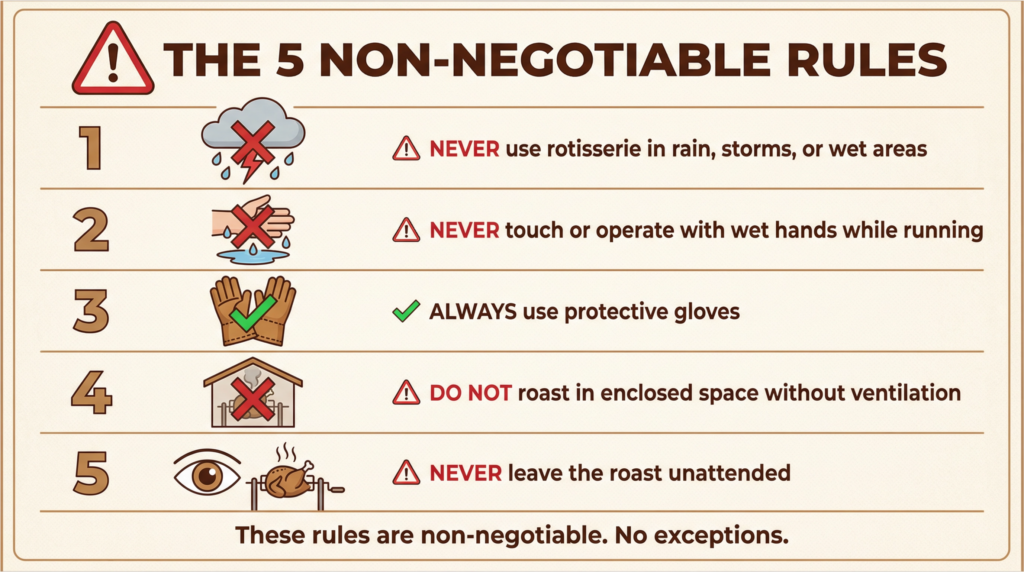
This is the “print and tape it to the table” safety list for every rotisserie roast. The five core rules are: never use in rain or with wet hands, always wear gloves, ensure good ventilation, and never leave the roast unattended. For a full breakdown of setup and operation, see our complete roasting guide and timeline checklist.
The Safety Checklist Table (Print This)
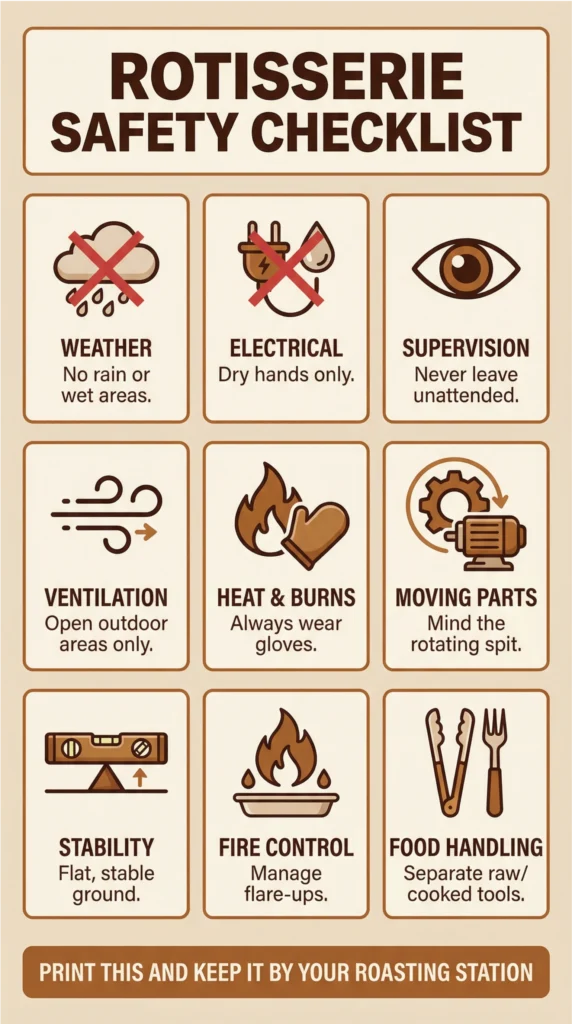
| Risk | What to Do | Don’t Do This |
|---|---|---|
| Weather / Wet Conditions | Postpone if rain or storms are forecasted. Keep the entire setup dry. | Never operate in the rain or on wet ground. |
| Electrical Risk | Use a GFCI outlet. Keep cords away from water and foot traffic. | Never touch the motor or plugs with wet hands. |
| Supervision & Perimeter | Keep a 10-foot clear zone. Supervise children and pets at all times. | Never leave the hot rotisserie unattended. |
| Ventilation / CO Risk | Operate in an open, outdoor area with plenty of airflow. | Never roast in a garage, tent, or enclosed patio. |
| Heat & Burn Risk | Wear heavy-duty, heat-resistant gloves. Use long-handled tools. | Never touch the spit, frame, or motor while it’s hot. |
| Moving Parts / Pinch Points | Be aware of the rotating spit and motor. Keep loose clothing away. | Never try to stop the spit with your hands. |
| Tip-Over / Stability Risk | Set up on flat, stable ground. Ensure the frame is solid. | Never set up on a slope or uneven surface. |
| Fire Control & Flare-Ups | Use a drip pan. Manage heat with two-zone fire. | Never use water to douse grease flare-ups. |
| Food Handling Basics | Use separate utensils for raw and cooked meat. Wash hands frequently. | Never cross-contaminate surfaces or tools. |
Before You Start (Mini Checklist)
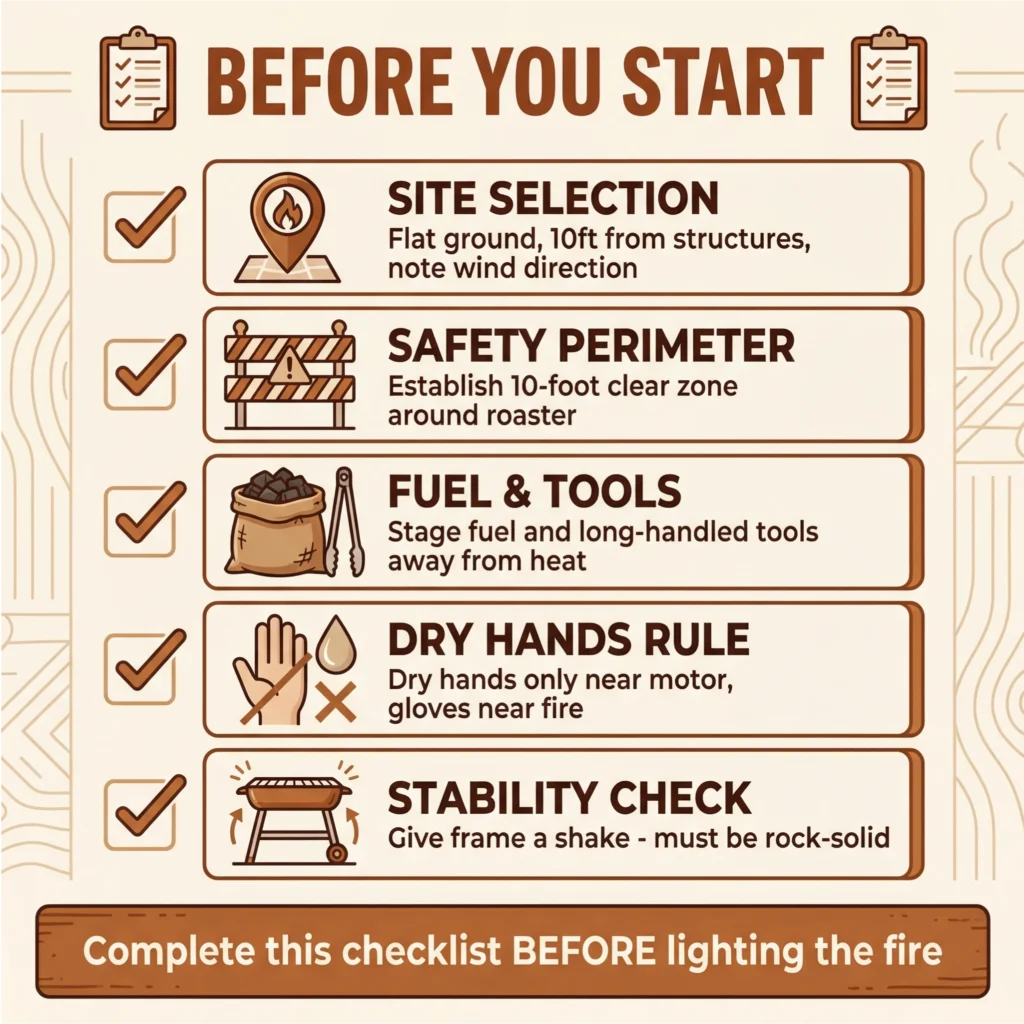
- Site Selection: Choose a spot on flat ground, at least 10 feet from any structure, and note the wind direction.
- Safety Perimeter: Establish a clear 10-foot zone around the roaster.
- Fuel & Tools: Stage your fuel and long-handled tools away from the immediate heat zone.
- Dry Hands & Gloves: Make it a rule: dry hands only near the motor, and gloves on when near the fire.
- Stability Check: Give the assembled frame a gentle shake. It should be rock-solid. An XXL Rotisserie frame is built for this.

During the Roast (Mini Checklist)
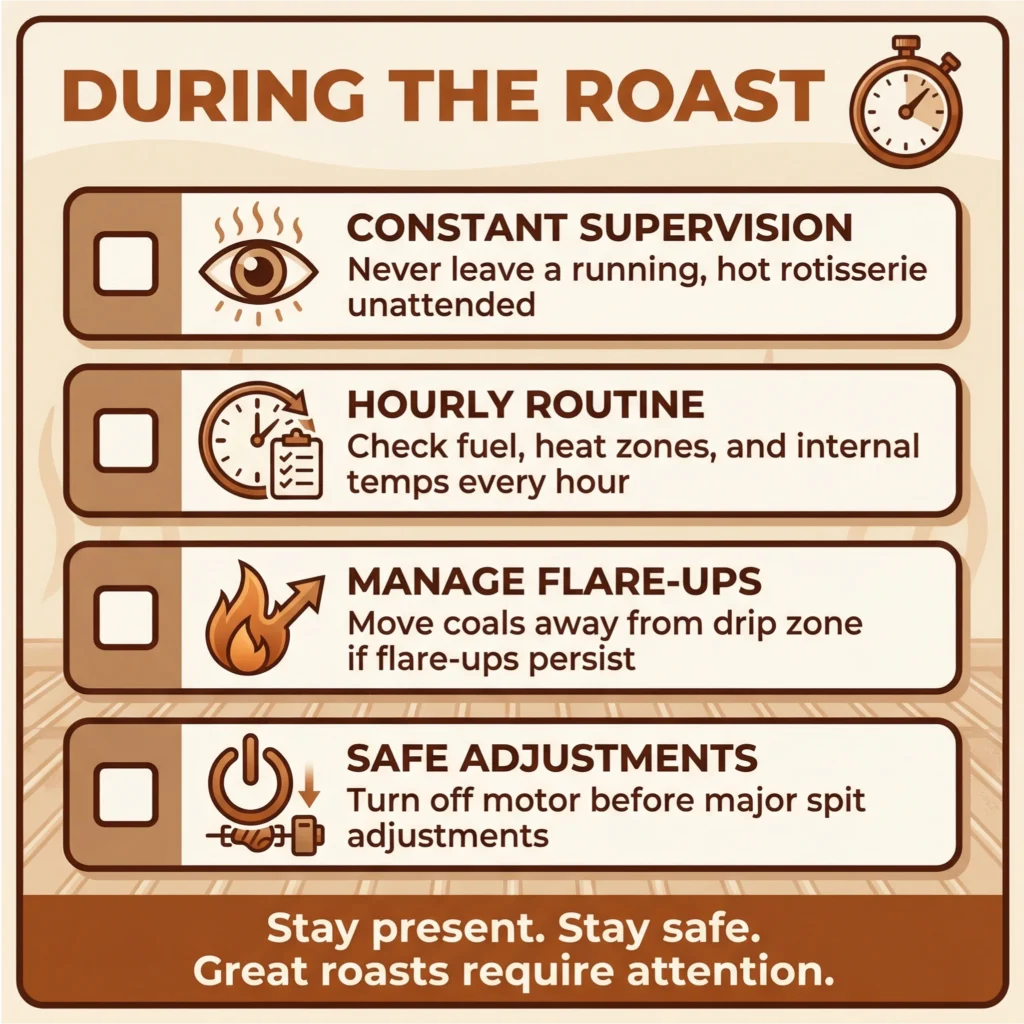
- Constant Supervision: Never leave a running, hot rotisserie unattended.
- Hourly Routine: Check your fuel, your heat zones, and your internal temperatures. See our temperature map for pig and temperature map for lamb.
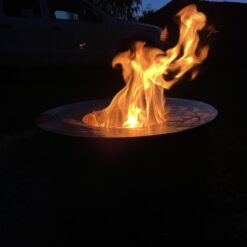
- Manage Flare-Ups: Move coals away from the drip zone if flare-ups persist. A good firebox can help contain the heat source.
- Safe Adjustments: For major adjustments to the spit or meat, it’s safest to turn off the rotisserie motor first.

If Something Goes Wrong (Quick Actions)
Quick Actions for Common Problems
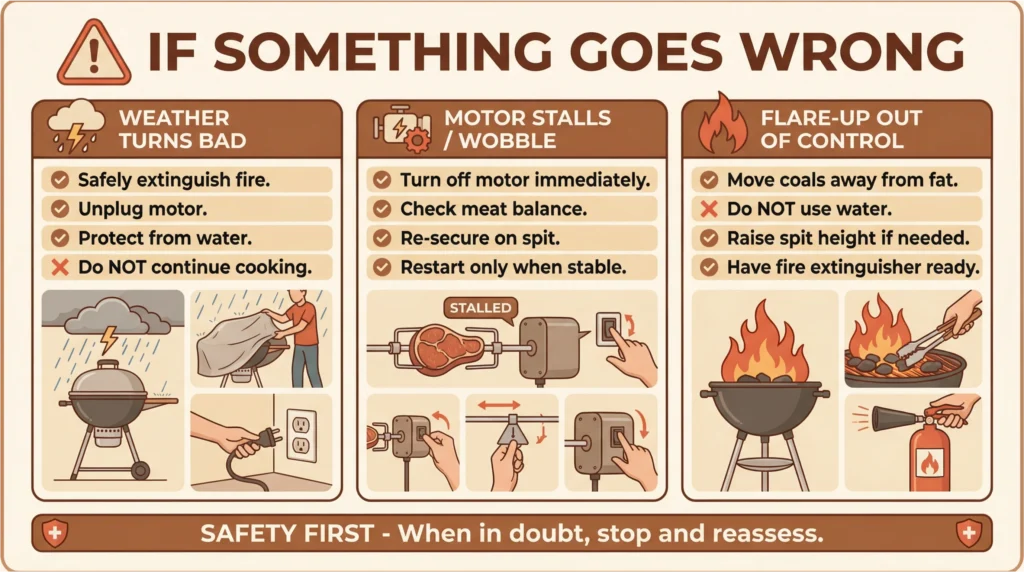
- Weather Turns Bad: If it starts to rain, immediately and safely extinguish the fire. Unplug the motor and protect it from water. Do not continue cooking.
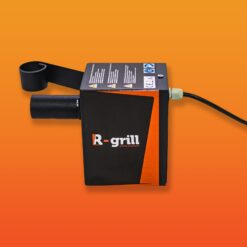
- Motor Stalls / Wobble Starts: Turn off the motor. Check the balance of the meat on the spit. Re-secure it if needed. See our motor strength guide.
- Flare-Up Gets Out of Control: Move coals away from the dripping fat. Do not use water. If needed, carefully raise the spit height.

Next Step
Safety is the foundation of a great roast. With these checks in mind, you’re ready to plan the cook. Here are the essential guides:
- Complete Step-by-Step Guide — Full overview
- Fire Distance & Heat Control — Zones, wind, flare-ups
- Do You Need a Motor? — Manual vs motorized
- Timeline Checklist — T-24h to serving
- How to Balance Your Spit — Stop wobble
- Common Rotisserie Mistakes — Avoid these errors